Kilimanjaro is often sold as the world's most accessible high-altitude summit. "No technical experience required," the brochures say. "Just walk to the top." As someone who has guided over 200 Kilimanjaro summit attempts in the last 12 years, I want to tell you the truth — because I believe the people who succeed are the people who know what they are actually signing up for.
The Marketing vs The Reality
It is true that Kilimanjaro requires no ropes, no crampons, and no technical mountaineering experience. In that sense, it is accessible in a way that Everest or Denali are not. But "accessible" does not mean "easy." Every year, thousands of trekkers arrive at Kilimanjaro underprepared for what the mountain actually demands, and the summit success rates reflect this.
Official statistics suggest that across all routes and operators, the overall Kilimanjaro summit success rate is around 65 percent. On the shorter 5-day Marangu Route, it drops below 50 percent. On our 8-day Lemosho Route with proper acclimatization, our success rate exceeds 90 percent — but that requires the right approach, the right mindset, and the right preparation.
The Summit Night Is Brutal
Nothing fully prepares you for summit night on Kilimanjaro. You leave camp at midnight or 1am in temperatures that can reach minus 15 to minus 25 degrees Celsius with windchill. You are at altitude, already tired from days of trekking, and you face 5 to 7 hours of relentless uphill in the dark, in the cold, on loose scree that slides under every step.
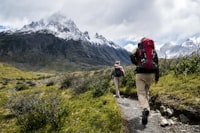
There is no trick to it. You walk. Slowly, deliberately, one foot in front of the other, in a rhythm so slow it does not feel like progress. Your guide will say "pole pole" — Swahili for "slowly slowly" — constantly. The slowest pace is the summit pace. Many experienced hikers struggle because they try to move faster than the mountain allows at altitude.
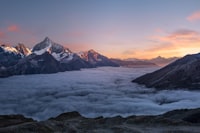
Honest assessment: Summit night is the hardest physical night most non-mountaineers will ever spend. It is also one of the most meaningful. Sunrise from Stella Point at 5,739m, looking out over the clouds of Africa as dawn breaks, is something that does not leave you.
Altitude Will Humble You
Above 4,500m, every trekker feels the altitude to some degree. Headaches are normal. Reduced appetite is normal. Fatigue that is disproportionate to the physical effort is normal. What matters is how your body acclimatizes and whether the symptoms remain mild or progress.
I have guided former marathon runners who needed to turn around at 5,000m and first-time trekkers in their 60s who summited feeling strong. Fitness helps — but it does not protect you from altitude. The body's response to altitude is individual and somewhat unpredictable. The best protection is a longer route with more acclimatization time, not better fitness.
The Porters Are the Real Story
One thing that moves most first-time Kilimanjaro climbers is the porters. On a typical Kilimanjaro climb, your group of 8 to 12 trekkers is supported by a team of 30 to 50 porters, guides, and cooks who carry your equipment, prepare your meals, and set up camp each day — often passing you on the trail while carrying 20kg loads and wearing basic rubber boots.
Trekkership is committed to KPAP certification, which means we pay above minimum wage, provide proper equipment including sleeping bags and warm clothing, enforce weight limits on porter loads, and ensure all staff receive fair treatment. When choosing a Kilimanjaro operator, ask specifically about their porter treatment policies. It matters more than most people realise.
What Makes People Succeed
After 200 summit guiding experiences, I can tell you exactly who tends to succeed on Kilimanjaro:
- People who move slowly without ego — The ones who accept "pole pole" as a philosophy, not just a walking pace, consistently summit. Those who fight the slow pace consistently struggle above 5,000m.
- People who eat and drink despite having no appetite — Altitude destroys appetite. The trekkers who force themselves to eat and drink 3 to 4 litres of water per day, even when they feel nauseous, have dramatically better summit success rates.
- People who trust their guide — A good Kilimanjaro guide has watched hundreds of bodies respond to altitude. When your guide says to slow down, slow down. When they say your symptoms are concerning, listen.
- People who have chosen the right route — 8-day Lemosho or 7-day Machame over 5-day Marangu every time. Two extra days of acclimatization makes an enormous difference at summit altitude.
Should You Do It?
Absolutely yes. Kilimanjaro is one of the most life-affirming experiences available to any adventurous person. The feeling of standing on Uhuru Peak at 5,895m as the sun rises over Africa, having climbed through rainforest, moorland, desert, and arctic landscape to get there — it stays with you forever.
But go in with honest eyes. Train aerobically for 3 to 6 months before. Choose a 7 to 8 day route. Hire a guide and tip your porter team generously. Drink water constantly. Walk slowly. And trust the mountain to give you what you are there for, in its own time and at its own pace.
Kilimanjaro does not reward the strong. It rewards the patient.

Amara Diallo
A certified mountain guide with Trekkership since 2011. Expert in high-altitude trekking, wilderness safety, and cultural immersion travel. All articles are based on first-hand experience guiding thousands of trekkers across the world's greatest trails.