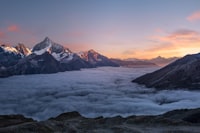
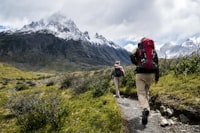
Nepal is without question the world's greatest trekking destination. Home to eight of the world's fourteen 8,000-metre peaks, ancient Sherpa culture, warm hospitality, and some of the most breathtaking mountain scenery on Earth, it is a place that changes people permanently. I have guided here for over two decades and it still stops me in my tracks every single time.
But planning a first trip to Nepal can feel overwhelming. Permits, seasons, routes, altitude, costs, safety — there is a lot to navigate. This guide covers everything you need to know, based on hard-won experience guiding thousands of first-time trekkers through the Himalayas.
When to Go: Nepal's Trekking Seasons
Nepal has two main trekking seasons, separated by the monsoon and winter periods:
- Spring (March to May) — The most popular season. Rhododendrons are in full bloom, skies are generally clear in the mornings, and temperatures are mild. Trails are busiest but for good reason. Ideal for both Everest and Annapurna regions.
- Autumn (October to November) — Many consider this the best time. Post-monsoon air is crystal clear, mountains are sharply defined, days are sunny, and nights are cold but not extreme. The most reliable season for photography.
- Winter (December to February) — Cold and quiet. High passes may be snowed in but lower routes are accessible. Dramatically fewer crowds and lower prices. Good for experienced trekkers on lower-altitude routes.
- Monsoon (June to September) — The wet season. Trails are slippery and leeches are active. Not recommended for most trekkers, though the Mustang and Dolpo regions are in the rain shadow and excellent in this period.
Permits: What You Need and How to Get Them
All foreign nationals trekking in Nepal require permits. The main ones are:
TIMS Card (Trekkers' Information Management System)
Required for most trekking areas. Costs $20 USD for group trekkers, $10 for those trekking independently with a registered agency. Issued by the Nepal Tourism Board or trekking agencies.
ACAP Permit (Annapurna Conservation Area)
Required for the Annapurna region. Costs $30 USD. Issued at ACAP checkposts or in Pokhara and Kathmandu.
Sagarmatha National Park Permit (Everest Region)
Required for all trekkers entering the Everest (Khumbu) region. Costs $30 USD. Issued at the park entry near Monzo or in Kathmandu.
On all Trekkership tours, we handle all permit procurement as part of your package. You simply need to bring your passport-size photos and passport copies.
Nepal Visa
Most nationalities can obtain a Nepal visa on arrival at Tribhuvan International Airport in Kathmandu. The fees are $30 for 15 days, $50 for 30 days, and $125 for 90 days. You will need passport photos and US dollars in cash. It is also possible to obtain your visa in advance through the Nepal embassy in your country.
Choosing the Right Trek for Your First Time
Nepal has hundreds of trekking routes, but for first-time visitors, these are the most popular and well-supported options:
- Everest Base Camp (16 days) — The iconic route. Challenging but achievable for fit trekkers. Maximum altitude 5,364m. Stunning Sherpa culture and the world's most famous mountain scenery.
- Annapurna Circuit (14 days) — The most diverse trek in Nepal. Crosses the 5,416m Thorong La Pass. Passes through four climate zones and several distinct cultural regions.
- Annapurna Sanctuary / Base Camp (10 to 12 days) — A shorter, lower-altitude option that takes you into a dramatic glacial amphitheater surrounded by 7,000m and 8,000m peaks. Good introductory trek.
- Langtang Valley (7 to 10 days) — Less crowded, culturally rich, and close to Kathmandu. An excellent shorter option with beautiful alpine scenery and friendly Tamang villages.
How Fit Do You Need to Be?
A common misconception is that Nepal trekking requires extreme athletic ability. It does not. What it requires is consistent cardiovascular fitness and the ability to walk for 5 to 8 hours per day for multiple consecutive days. I regularly guide people in their 60s and 70s to Everest Base Camp successfully.
For preparation, I recommend building a base of regular walking, hiking, and stair climbing in the 3 to 6 months before your trek. Day hikes with a loaded backpack are the best specific preparation. The altitude adds challenge that no amount of gym training fully prepares you for — which is why proper acclimatization in the itinerary matters more than peak fitness.
Costs: What to Budget
Nepal is one of the most affordable major trekking destinations in the world:
- Flights — international flights to Kathmandu typically cost $500 to $1,200 from most major cities
- Guided trek package — $1,800 to $2,800 per person for a full supported guided trek with Trekkership, including guide, tea houses, permits, and meals
- Personal spending — budget $20 to $30 USD per day for extra drinks, snacks, souvenirs, and tips
- Nepal visa — $50 USD for 30 days
- Travel insurance — $100 to $200 depending on policy and duration (must cover high-altitude trekking and helicopter evacuation)
Tea Houses: Where You Sleep
The vast majority of Himalayan trekking is done hut-to-hut, staying in tea houses — family-run mountain lodges providing a bed, meals, and a welcome cup of chai. Rooms are basic (twin beds, shared bathroom in most), but warm, welcoming, and full of character. Wifi is available at many tea houses, though connectivity is unreliable above 4,000m. Most tea houses now have solar phone charging.
Health and Vaccinations
Recommended vaccinations before travelling to Nepal include typhoid, hepatitis A and B, tetanus, and meningitis. Rabies vaccination is recommended if you plan to spend time in rural areas. Malaria risk is low in Kathmandu and trekking areas above 2,000m. Confirm current recommendations with your travel health clinic at least 6 to 8 weeks before departure.
Travel insurance that specifically covers high-altitude trekking and helicopter evacuation is mandatory for all Trekkership clients. Helicopter evacuations from the Khumbu region can cost $3,000 to $8,000 without insurance.
The Cultural Side of Nepal
Nepal is not just mountains. It is a deeply spiritual country where Hinduism and Buddhism intertwine in a beautiful, ancient tapestry. Take time in Kathmandu to visit Pashupatinath Temple, Boudhanath Stupa, and Swayambhunath. On the trail, always walk clockwise around mani stones and stupas, remove your shoes before entering monasteries, and ask before photographing people. A little cultural awareness goes a long way toward meaningful connection.
The Sherpa people of the Khumbu region are among the most remarkable people I have ever met. Their generosity, resilience, and warmth at extreme altitude is something that will stay with you long after you return home.

Marcus Trail
A certified mountain guide with Trekkership since 2011. Expert in high-altitude trekking, wilderness safety, and cultural immersion travel. All articles are based on first-hand experience guiding thousands of trekkers across the world's greatest trails.