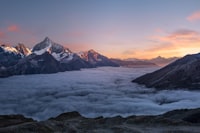
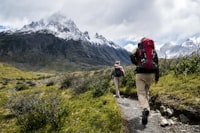
Solo trekking is experiencing a surge in popularity, and it is easy to understand why. There is something deeply empowering about setting your own pace, following your own curiosity, and sitting alone with a mountain view that belongs entirely to you. But the mountains demand respect regardless of your group size — and solo trekkers carry additional responsibilities that group trekkers can share.
Over 12 years guiding in Africa and beyond, I have seen solo trekkers handle the mountains brilliantly and others make dangerous decisions that could have been avoided with simple preparation. This guide is for anyone considering their first solo trek, or wanting to improve how they approach solo travel in the mountains.
Tell Someone Where You Are Going
This is the most fundamental rule of solo adventure travel and it is broken constantly. Before every trek, provide a trusted person with your full itinerary: start point, end point, each day's route and overnight location, your expected return date, and what action they should take if they have not heard from you by a specific time and date.
Leave the contact details of your trekking operator, the local emergency number, and the nearest medical facility. This information costs nothing and could save your life.
Register Your Trek
In most major trekking regions, trekkers must register their permits at checkposts along the trail. Do not skip these checkposts. They exist precisely to track trekkers and enable search and rescue operations to find missing hikers. In Nepal, your TIMS card and national park permits are checked at multiple points throughout your route. Make sure your details are current and accurate.
Communication Devices
Mobile phone coverage is unreliable in most mountain environments. For serious solo trekking — particularly at altitude or in remote areas — consider these options:
- Satellite communicator (Garmin inReach, SPOT) — allows two-way text messaging and SOS anywhere in the world, regardless of mobile coverage. A genuine lifesaver. The subscription costs around $15 to $35 per month.
- Personal locator beacon (PLB) — one-way emergency beacon that triggers a rescue response via satellite. No subscription required. Does not allow communication but activates rescue services globally.
- Downloaded offline maps — Maps.me and Gaia GPS both offer excellent downloadable offline trail maps. Download your full route area before you leave mobile coverage.
Important: A satellite communicator is not a substitute for proper planning and risk management. It is an emergency backup, not a get-out-of-jail-free card. The mountains do not care how much your device cost.
Guide Yourself or Hire a Guide?
On popular, well-marked trails like the Annapurna Circuit, W Trek, or Tour du Mont Blanc, experienced trekkers can navigate independently with good maps and trail knowledge. In more remote areas, or for solo first-time trekkers, a local guide dramatically improves both safety and experience.
A good guide does not diminish your solo experience. Many solo travellers join a small guided group for the safety and social benefits while still having significant time alone on the trail each day. This is what we offer at Trekkership — small groups that feel personal and give solo travellers the best of both worlds.
Solo Women Trekking
Solo female trekking has grown enormously and many of my most impressive clients over the years have been women trekking alone. The Himalayas, Andes, Alps, and East Africa are all generally safe for solo women trekkers with sensible precautions:
- Research the cultural norms of the region you are visiting and dress respectfully
- Stay in established guesthouses and tea houses on popular routes rather than wild camping alone
- Trust your instincts — if a situation feels uncomfortable, leave
- Connect with other trekkers on the trail — the trekking community is overwhelmingly friendly and supportive
- Carry a personal alarm
- Choose a reputable guided operator if you have any doubts about a particular region
Know Your Limits and the Weather
Solo trekkers must be more conservative with risk than group trekkers. A twisted ankle is a manageable inconvenience in a group but can become a serious emergency alone in a remote area. Do not push through bad weather, do not attempt technical terrain you are not confident on, and turn back earlier than you think you need to when conditions deteriorate.
Always check the mountain weather forecast before each day's trek. Windy Today, Mountain Forecast, and local ranger stations are good sources. In Patagonia, check the CONAF weather updates daily — the weather can change from calm to dangerous in under an hour.
The Solo Trekking Mindset
The most important safety tool for solo trekkers is not a device or a piece of gear. It is a mindset of deliberate, conservative decision-making. Ego has no place in the mountains. The ability to turn around, take a rest day, or choose the easier route is not weakness — it is the mark of an experienced mountain traveller. The summit will still be there. Your health and safety are irreplaceable.
Solo trekking at its best is a profound, empowering experience that teaches you more about yourself than almost anything else. With proper preparation and respect for the mountains, it is one of the most rewarding things you can do with your time on Earth.

Amara Diallo
A certified mountain guide with Trekkership since 2011. Expert in high-altitude trekking, wilderness safety, and cultural immersion travel. All articles are based on first-hand experience guiding thousands of trekkers across the world's greatest trails.